
Photo by Black Taxi Tours of London
In the heart of London, among the grand buildings and busy streets, lies a remarkable legacy left by a man who believed that wealth was best used to improve the lives of others.
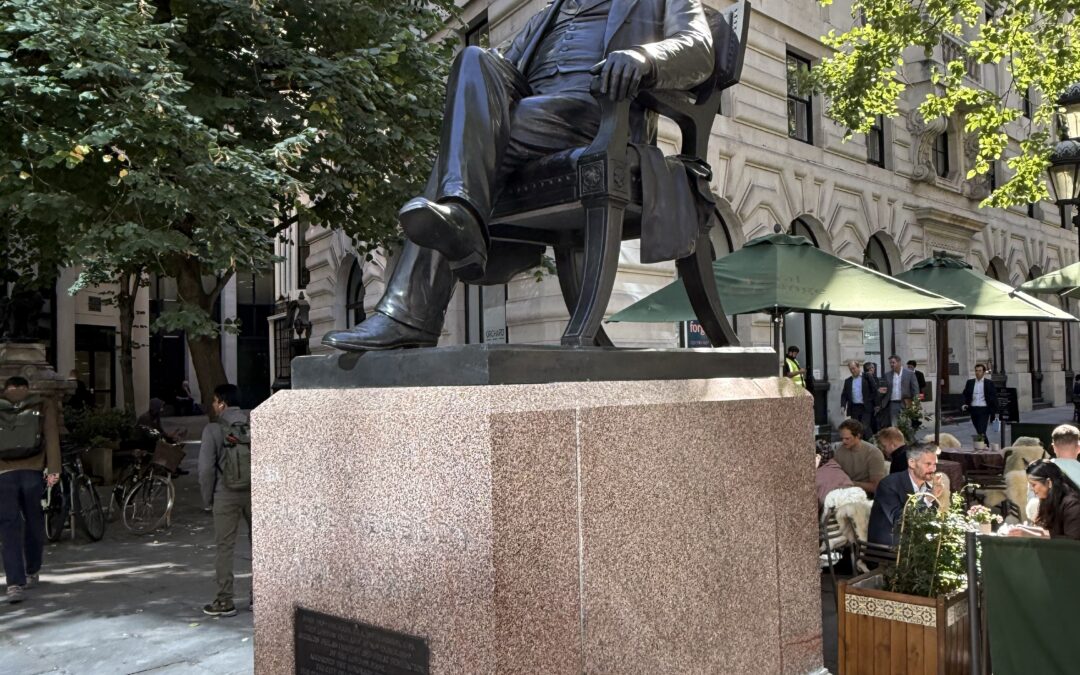
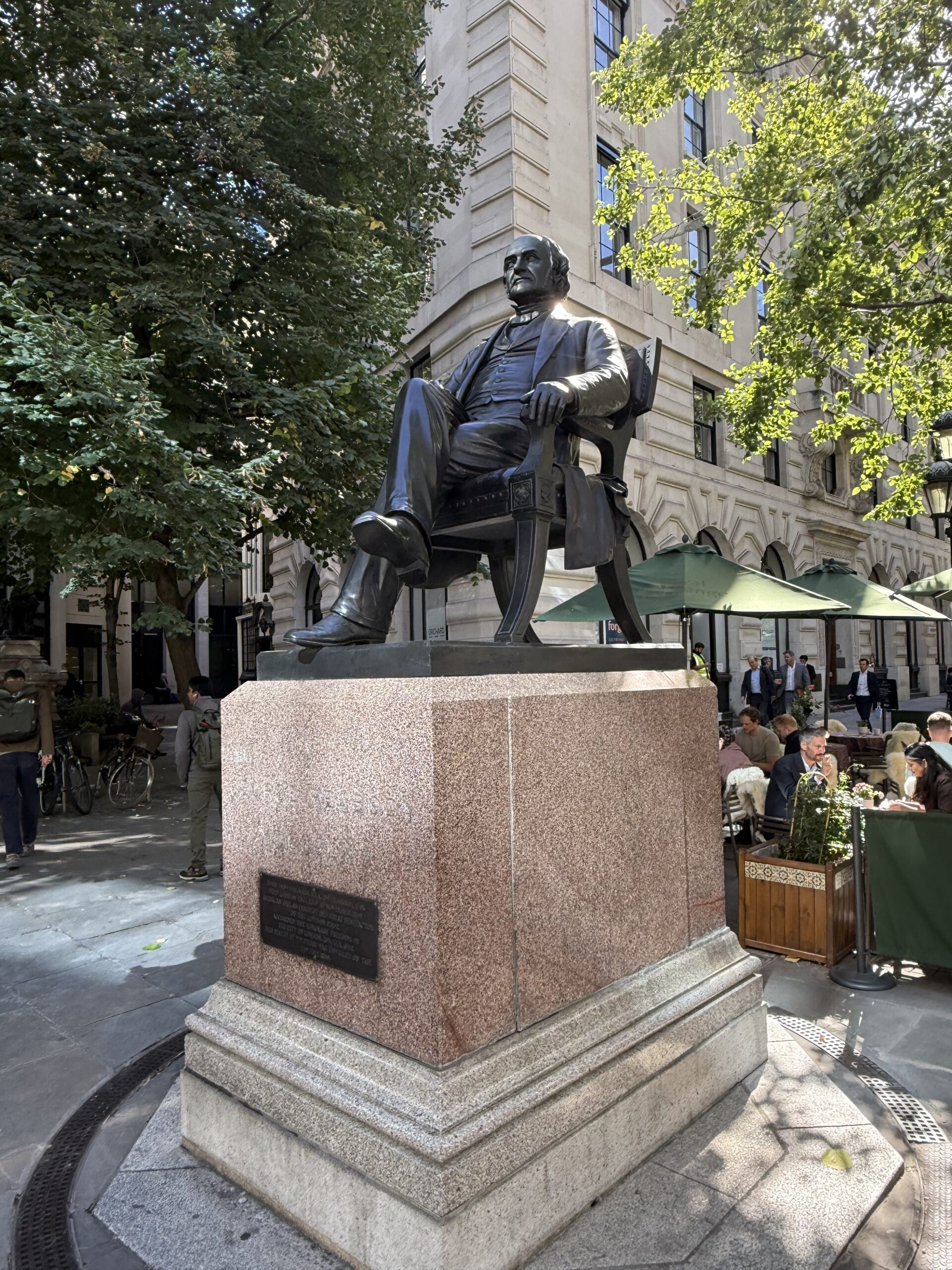
Standing outside the Royal Exchange in the heart of the City of London, the statue of George Peabody (1795–1869) commemorates an American businessman whose generosity helped transform the lives of thousands of Londoners
Peabody (1795–1869) was an American businessman whose generosity helped transform housing for some of Victorian London’s poorest residents.
Peabody was born in South Danvers, Massachusetts, into a modest family. He began his working life in trade before building a successful international banking business. In 1837, he settled in London, which was then the financial capital of the world. From here, he developed his business interests and became a respected figure in the City, helping to strengthen financial links between Britain and America.
Yet it was not simply his business success that secured his place in London’s history. Peabody was deeply concerned by the appalling living conditions endured by many working-class Londoners. During the nineteenth century, overcrowded slums, poor sanitation and inadequate housing were major problems, particularly for families struggling on low wages.
In 1862, he established the Peabody Donation Fund, giving £150,000, a substantial fortune at the time. to provide decent, affordable homes for London’s poor. His intention was practical rather than sentimental: people should have access to clean, well-built accommodation at rents they could afford.
The first Peabody housing development opened in Spitalfields in 1864. Built around courtyards, the blocks offered a considerable improvement on the overcrowded lodging houses in which many working people lived. The scheme became a model for further developments across London, and the Peabody organisation continued its work long after its founder’s death.
Peabody was also a celebrated figure in Anglo-American relations. In 1867, Queen Victoria offered him a baronetcy in recognition of his generosity. He declined the honour, preferring to accept a personal gift from the Queen: a miniature portrait of her, set with diamonds. The exchange reflected the esteem in which he was held, both for his philanthropy and for the friendship he fostered between Britain and America.
When George Peabody died in London in 1869, he was given a public funeral before his body was returned to America for burial. His passing was marked by tributes on both sides of the Atlantic, a fitting farewell to a man who had made two countries his home.
See the statue of George Peabody on a bespoke black cab tour of London!
www.blacktaxitours.co.uk info@blacktaxitours.co.uk