
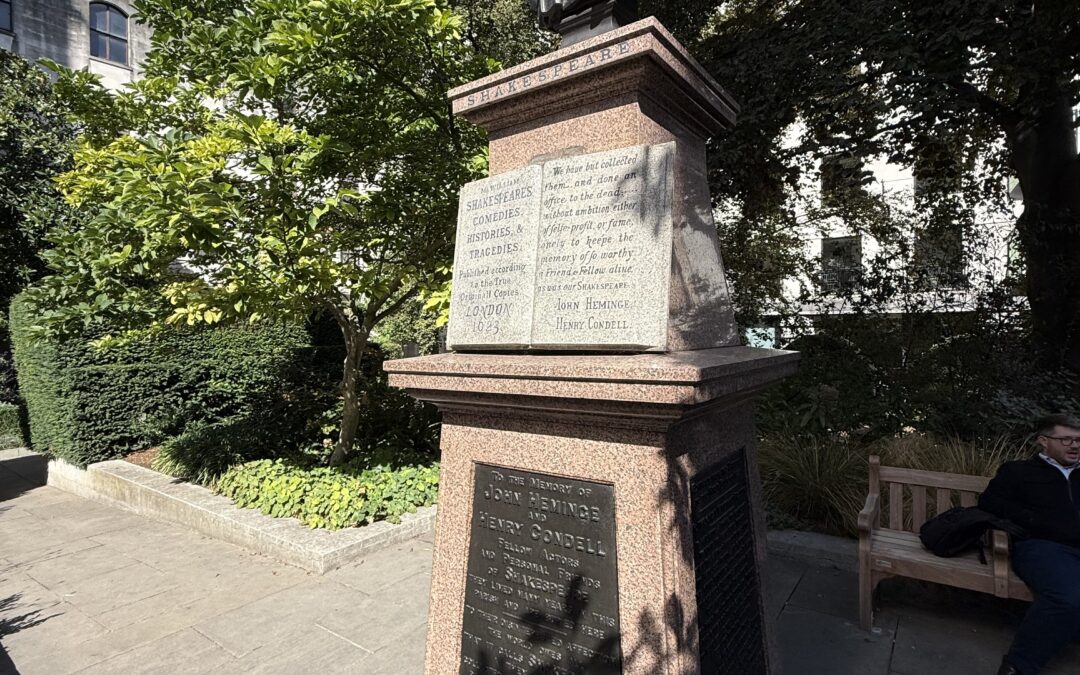
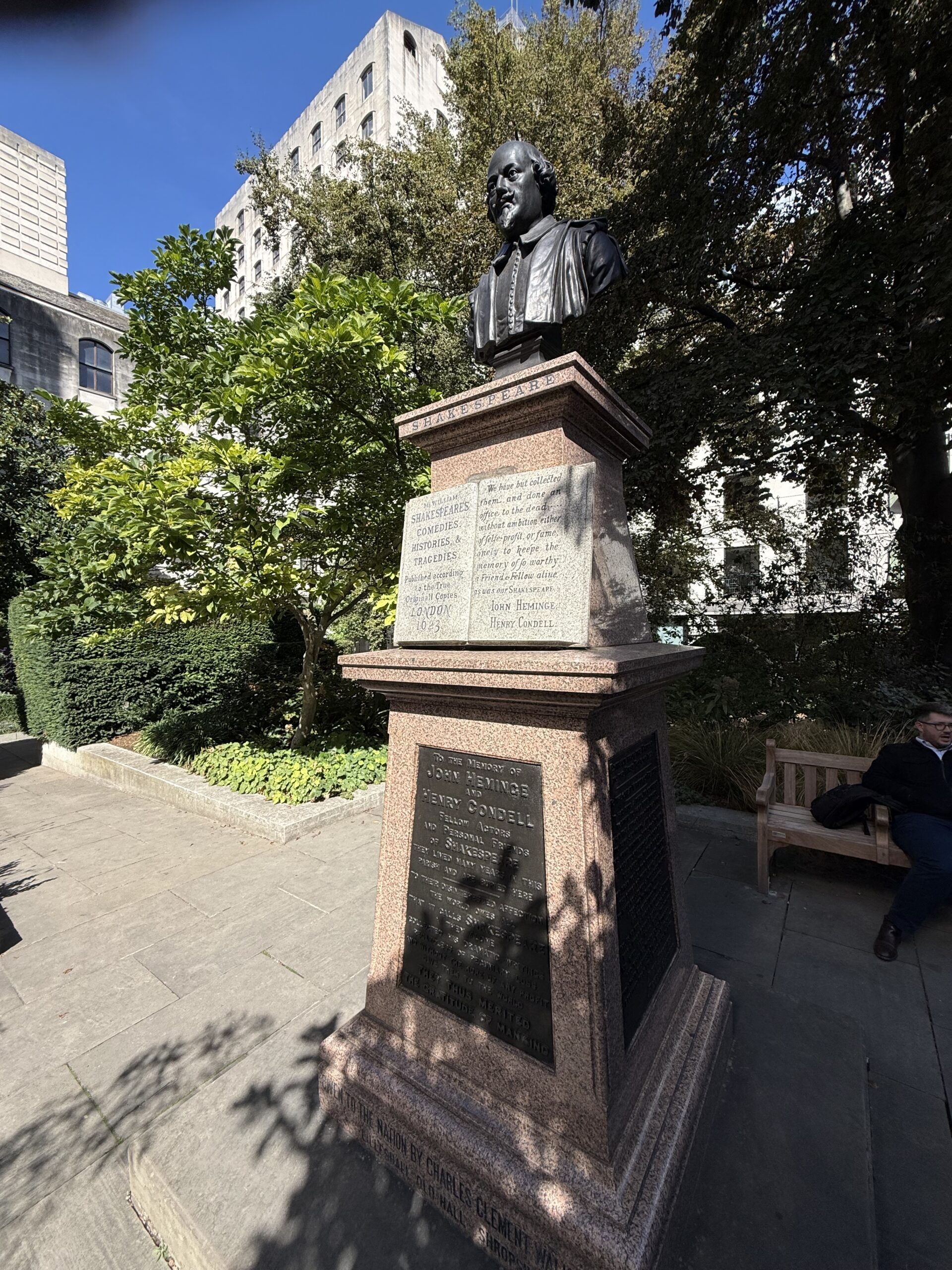
For visitors exploring the historic streets of the City of London, the Shakespeare bust in Love Lane, offers a fascinating connection to England’s most celebrated playwright.
William Shakespeare’s relationship with London was central to his success. He worked as a playwright and actor in the capital during the late 16th and early 17th centuries, when the city’s theatres attracted audiences from all walks of life. His plays entertained everyone from ordinary Londoners to members of the royal court, and his legacy remains firmly woven into the city’s cultural history.
A curious story behind the Bard
One of the most intriguing things about Shakespeare is how little we know about his actual appearance. There are no securely authenticated portraits painted during his lifetime and the familiar image of the playwright owes much to later representations, particularly the famous Droeshout engraving published in the First Folio of his plays in 1623.
This has not stopped generations of artists from imagining the face behind the words. Shakespeare’s likeness has appeared in countless statues, busts and memorials around the world. Indeed, if the Bard could see how many times his face has been reproduced, he would be mightily amused.
The memorial is actually dedicated to two of Shakespeare’s fellow actors, John Heminges and Henry Condell. After Shakespeare’s death in 1616, these two men helped preserve his dramatic legacy by collecting and publishing his plays in the First Folio of 1623. Without their efforts, some of his greatest works might never have survived.
The memorial was erected in the 1890s in the former churchyard of St Mary Aldermanbury, a church that suffered destruction in both the Great Fire of London in 1666 and the Blitz during the Second World War.
See Shakespeare’s bust in Love Lane on a ‘Secret London’ black cab tour!
BLACK TAXI TOURS OF LONDON
www.blacktaxitours.co.uk info@blacktaxitours.co.uk
Photograph by Black Taxi Tours of London