
Image by Black Taxi Tours of London
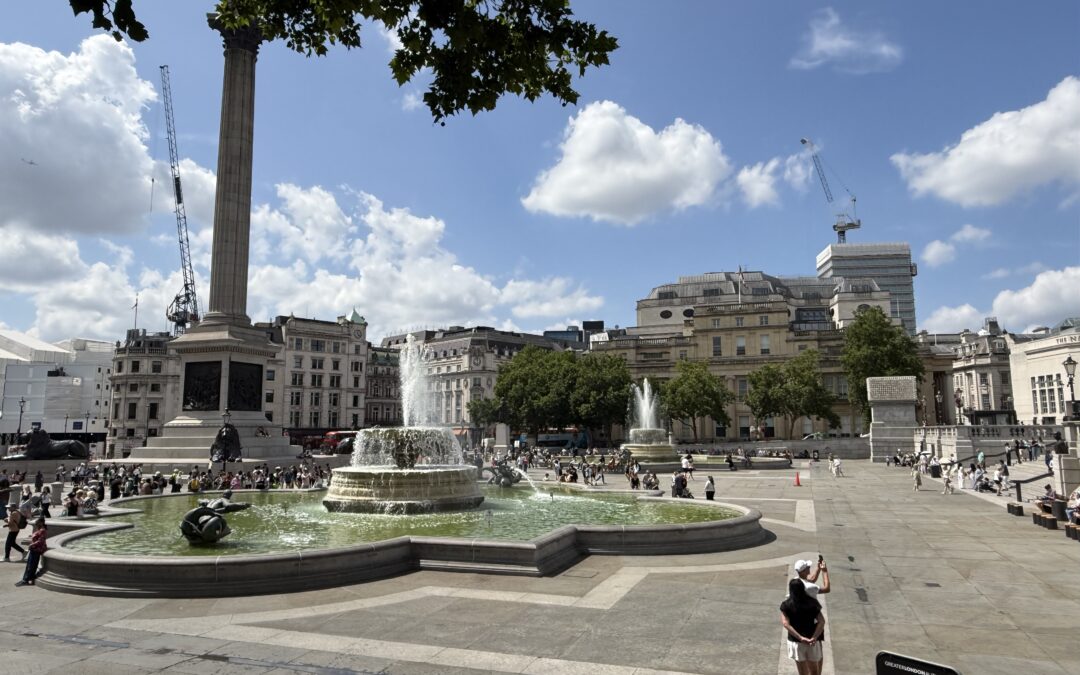
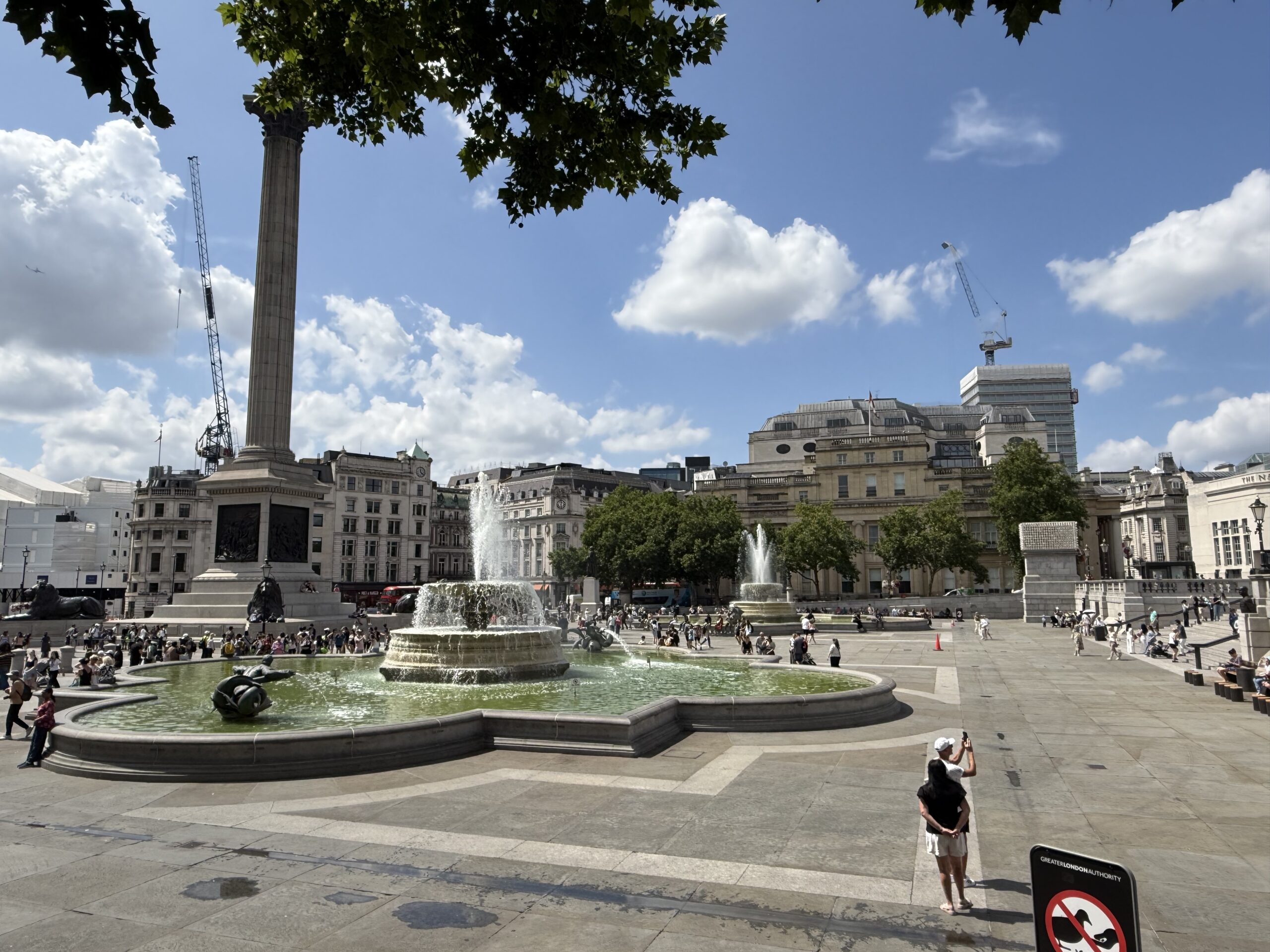
Few places capture the spirit of London quite like Trafalgar Square. Located in the centre of the city, this famous public space commemorates the British victory at the Battle of Trafalgar in 1805, where Admiral Horatio Nelson defeated the combined French and Spanish fleets during the Napoleonic Wars. The victory secured Britain’s command of the seas and remains one of the most celebrated moments in British naval history.
The square itself was developed in the 1840s on the site of the former Royal Mews, the royal stables that once occupied the area. Designed by architect Charles Barry, the square was intended to create a grand public space at the heart of London. At its centre stands Nelson’s Column, a monument nearly 52 metres high, topped by a statue of the admiral. Four enormous bronze lions, added in 1867, guard the base of the column and have become one of London’s most recognisable sights.
Throughout its history, Trafalgar Square has served as a focal point for national celebrations, political demonstrations, and public gatherings. Crowds have assembled here to mark royal occasions, celebrate military victories, and welcome in the New Year. During the Second World War, it became a symbol of resilience as London endured the Blitz.
One amusing anecdote concerns the bronze lions. When sculptor Sir Edwin Landseer designed them, he reportedly studied a real lion carcass borrowed from London Zoo. Unfortunately, the carcass began to decompose before he could complete his observations. As a result, the lions’ paws look curiously like those of a large dog rather than a true lion, a detail that still delights observant visitors today.
Today, Trafalgar Square remains one of London’s busiest and most vibrant public spaces. Surrounded by historic buildings and home to the magnificent National Gallery, it offers visitors a fascinating blend of history, culture, and everyday London life.
See Trafalgar Square on a black cab tour of London!
www.blacktaxitours.co.uk info@blacktaxitours.co.uk