
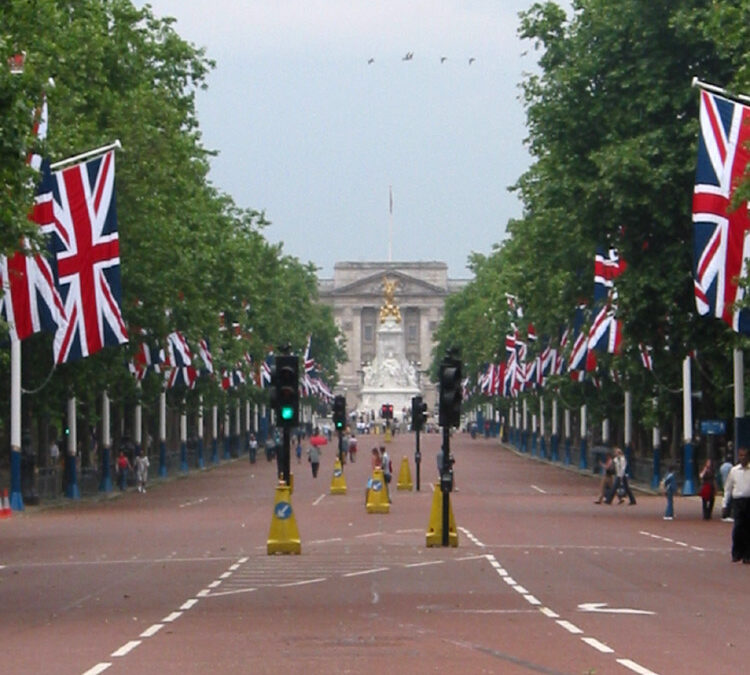
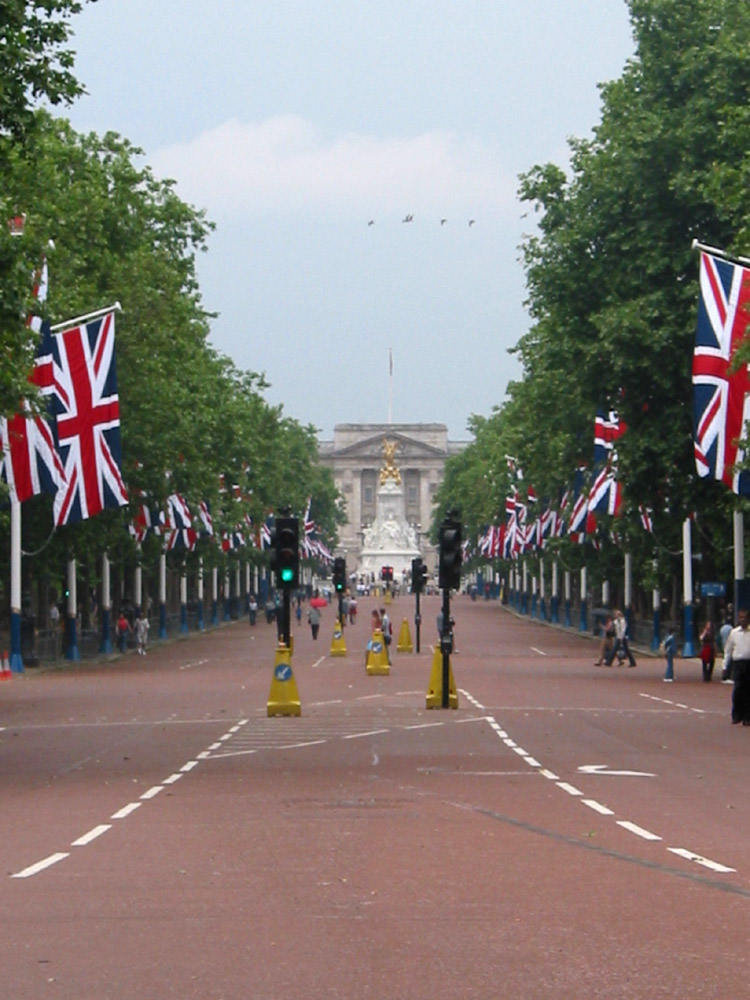
If there’s one place in London where tradition and spectacle meet, it’s The Mall.
This grand, red‑surfaced avenue stretching from Buckingham Palace to Admiralty Arch has been the backdrop for royal processions and national celebrations for decades.
Originally a 17th‑century walkway and playground for the game of pall‑mall, The Mall was transformed in the early 1900s under King Edward VII, who wanted a ceremonial approach to Buckingham Palace worthy of a modern monarchy. The result was a sweeping boulevard paved in a distinctive red surface, not painted, but mixed with crushed red stone so the entire road resembles a giant red carpet.
From coronations to jubilees and royal weddings to state visits, The Mall has hosted the full spectrum of British pageantry. Crowds gather shoulder‑to‑shoulder, flags wave, and the rhythmic clatter of the Household Cavalry fills the air.
But for all its formality, The Mall has a wonderfully human side.
During the 2002 Golden Jubilee parade, an elephant taking part in the festivities decided to improvise. Instead of sticking to the carefully planned route, it wandered off, causing a brief moment of chaos and a lot of laughter. Handlers eventually coaxed it back, but not before it became the unexpected star of the day.
In the 1980s, an early‑morning jogger found himself unintentionally running alongside Queen Elizabeth II, who was out riding. She reportedly gave him a polite nod, very much in keeping with her understated charm, before security gently steered him away. Only on The Mall could a casual morning run turn into a royal meet‑and‑greet.
The Mall remains a powerful symbol of continuity. In a city that constantly reinvents itself, this grand avenue holds fast to tradition while welcoming millions who come to witness history in motion.
See The Mall on a black cab tour of London!
Courtsey of Wikipedia. The Mall, London. Looking towards Buckingham Palace Photo taken 1 June 2003 copyright Richard Gallagher. Permission is granted to copy, distribute and/or modify under the GFDL, version 1.2 any later version published by the Free Software Foundation; wi