

Image courtesy of Wikipedia
I can’t tell you how many times as a taxi tour guide, I’ve been asked by visitors to take them to see the famous London Bridge. Everyone knows the nursery rhyme about London Bridge falling down! Needless to say, they are very disappointed when they see the current, rather uninspiring concrete offering.
However, if they have time to stop and visit St Magnus the Martyr just a stone’s throw away, a pleasing surprise awaits them.
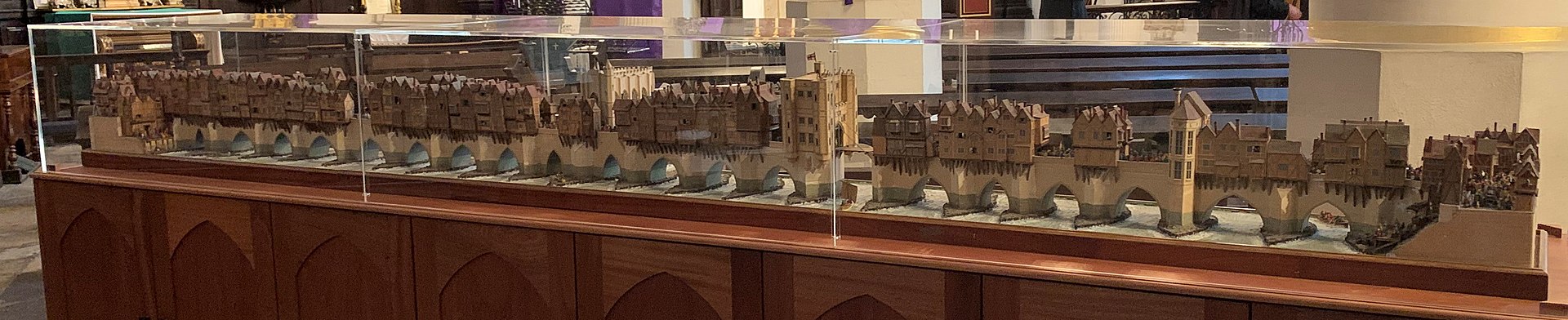
Enter the main door from Lower Thames Street and right in front of you, in a glass cabinet, is a wonderful 4-metre-long model of Old London Bridge, complete with its classic nineteen arches.
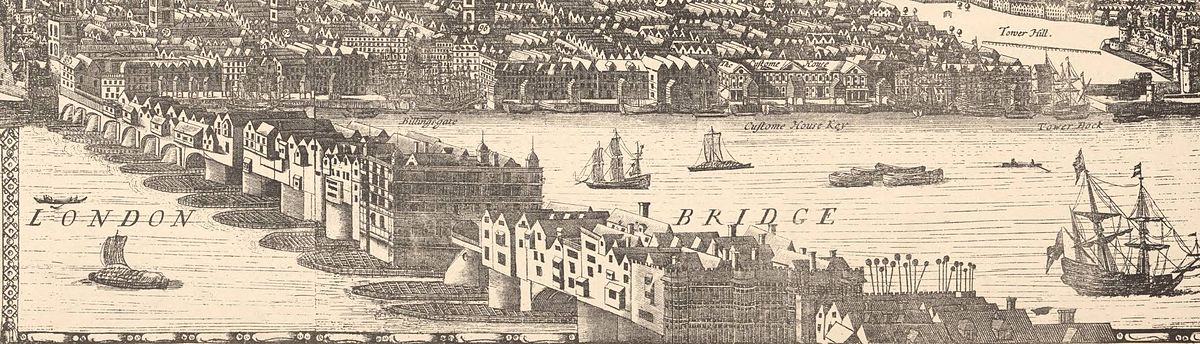
Image courtesy of Wikipedia.
These arches proved a serious challenge for watermen of the day because they had the effect of squeezing water through and creating a dangerous rapid. Depending on the tide there could be water levels of up to six feet difference either side of the bridge.
It is estimated that up to fifty watermen drowned every year trying to get their boats through, and often passengers would disembark before the bridge as a precaution and rejoin when it made it through the arch!
This model brilliantly recreates the famous old bridge and includes 900 tiny figures of 16th Century Londoners going about their business. There’s even severed heads on spikes at one end to give it that authentic feel!
It was constructed in 1987 by an ex-policeman called David T Aggett, who recuperating from an accident, decided to build the model using only cardboard boxes.
By Northcote Lea – Own work, CC BY-SA 3.0, https://commons.wikimedia.org/w/index.php?curid=17975723
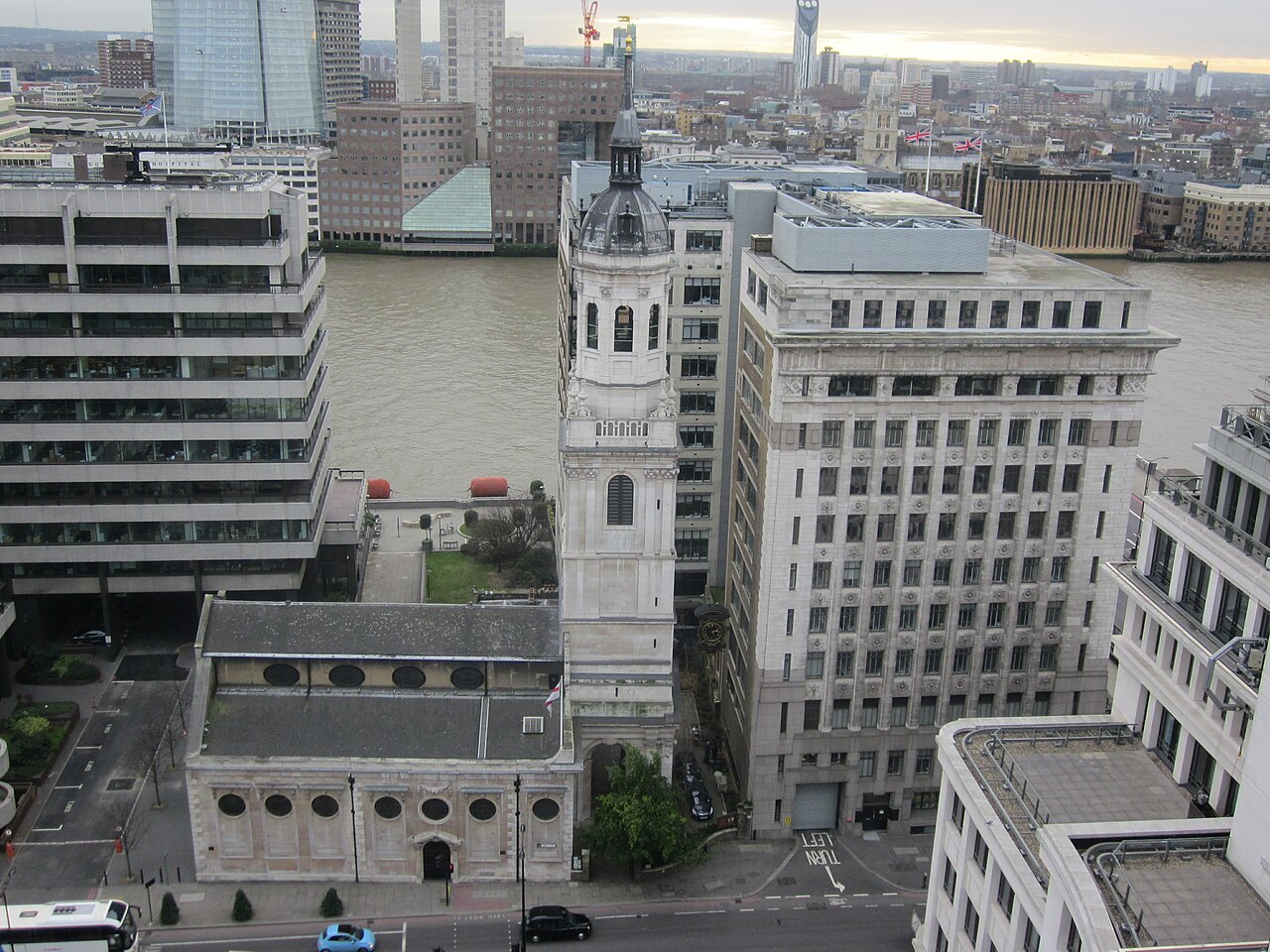
The placing of the model here in St Magnus the Martyr is deliberate. The church lay on the direct alignment of the original bridge – the later London Bridge was built about 100 feet to the west.
St Magnus the Martyr is also no slouch when it comes to its own history.
The church you see today is not the original. It was first built in the 11th century and like so many city churches suffered the double jeopardy of Great Fire of London and the WW2 blitz. Destroyed twice, it was rebuilt twice.
By Basher Eyre, CC BY-SA 2.0, https://commons.wikimedia.org/w/index.php?curid=11341541
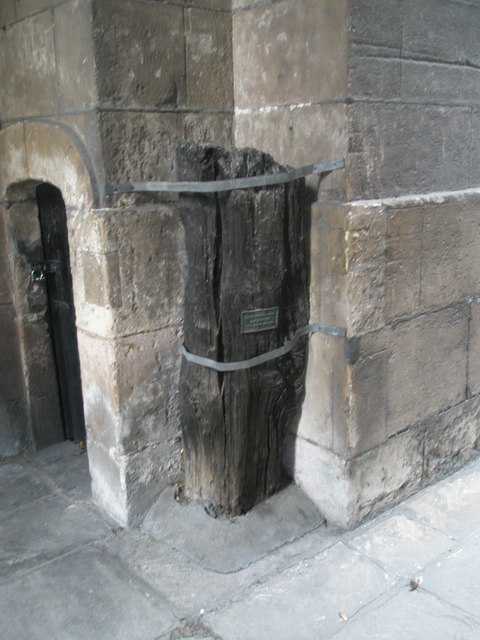
And not content with just one secret, another surprise lies within the grounds of the church. There are some original preserved Roman timbers dating from about 75 AD. They would have been part of the original working wharf that lined the river in Roman London. (They were found by archaeologists in nearby Fish Street Hill in 1931.)