
Here’s a great pub quiz question. What is the oldest surviving blue plaque in London?
It’s a great question, not only because it’s worth knowing but the answer comes as a bit of a shock.
Firstly, what are London blue plaques?
In the words of English Heritage who now run the scheme, London’s blue plaques link famous people of the past with buildings of the present. It was started in 1866 and is thought to be the oldest of its kind in the world.
Walk around the city, gaze up at many of its older residences and you’ll see which famous person or people lived there. Most are well known characters who need no introduction like Churchill, Enid Blyton or Sir Isaac Newton. But occasionally someone comes along who surprises you and makes you want to know more.
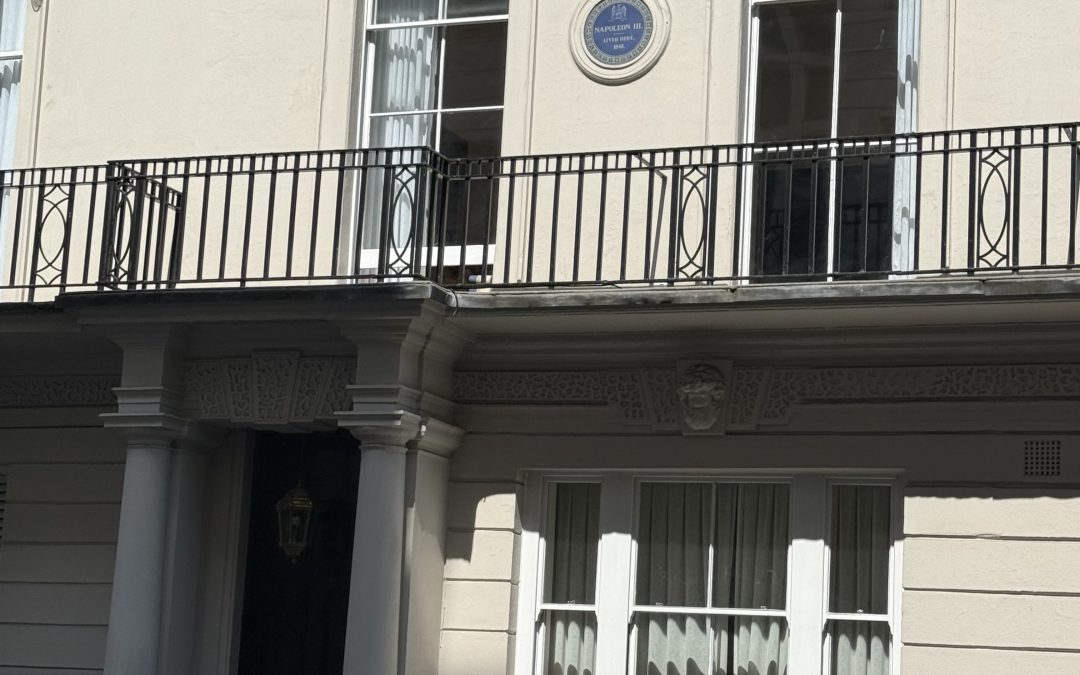
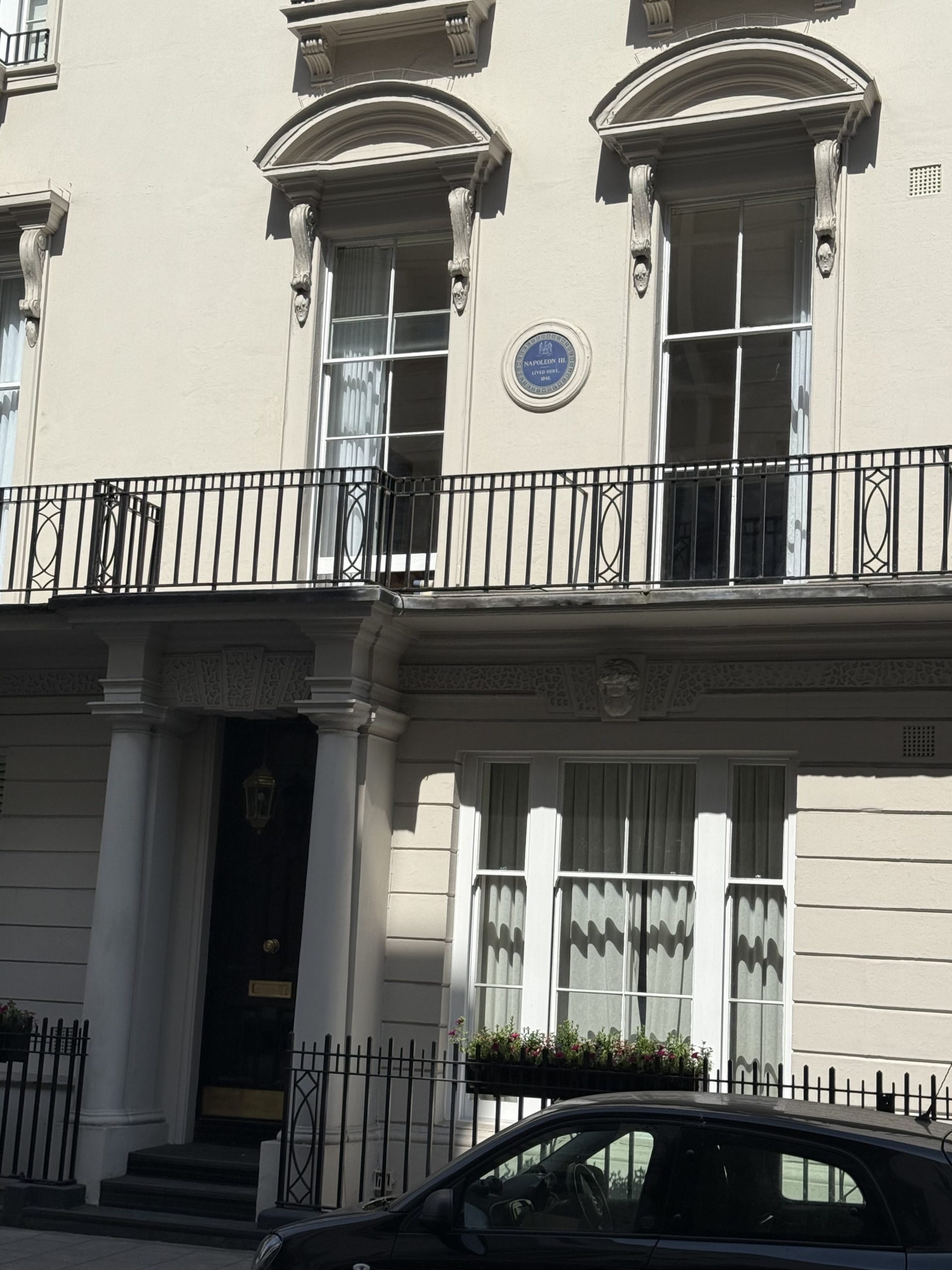
Okay. Enough suspense. London’s first blue plaque was none other than Napolean.
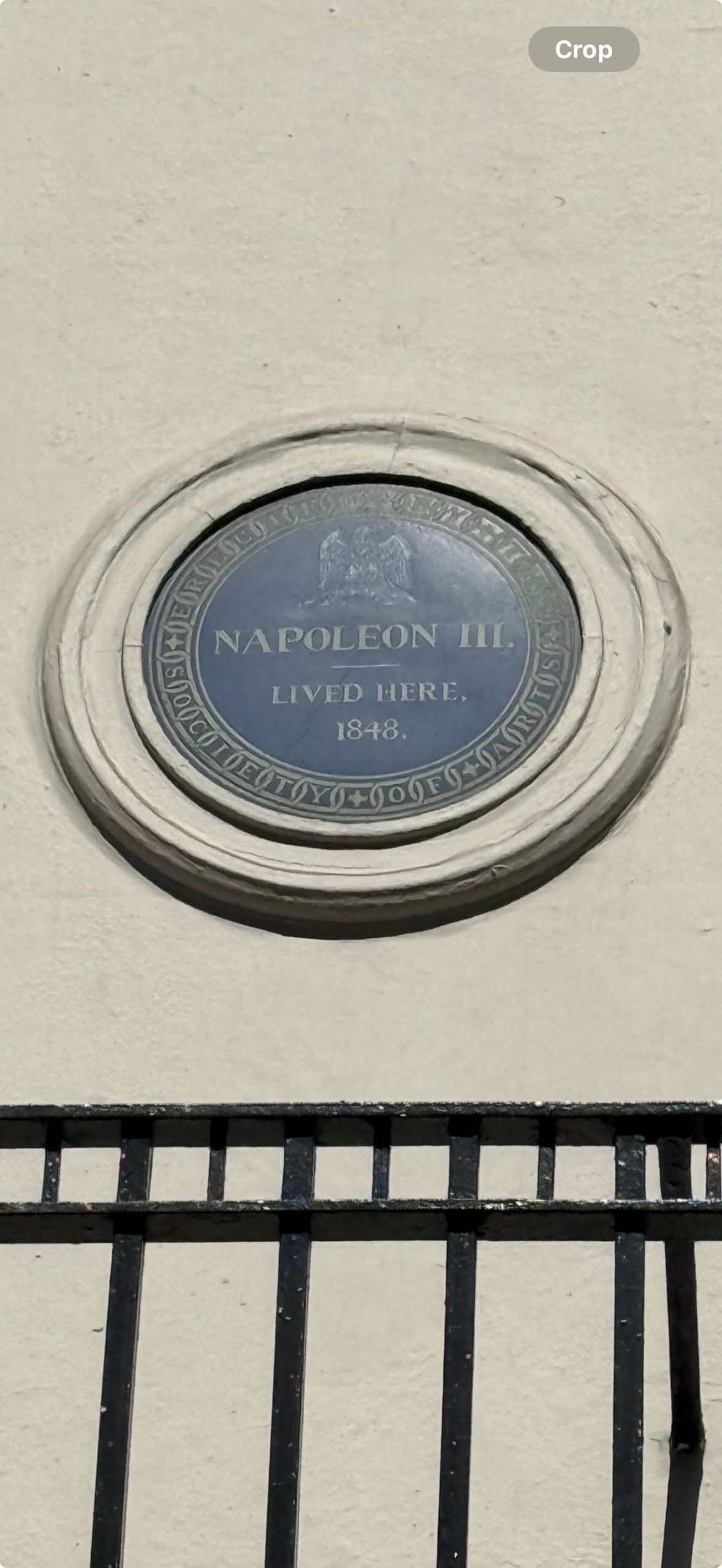
No, not him, our arch enemy, the one Wellington defeated at Waterloo. But Napolean III who was his nephew.
So how did Napolean’s nephew end up in London and earn the right of becoming the recipient of the city’s first blue plaque.
Long story, but a quick version is this.
Prince Louis Napoleon Bonaparte was born in Paris and, like other members of his family, was exiled from France after the Battle of Waterloo. On his return to France in 1840, Louis Napoleon was imprisoned for life, but six years later he managed to escape and fled to England.
In February 1847 he took a lease on a newly built house in King Street and transformed its interior into a shrine to the Bonapartes, installing a portrait of Napoleon I by Delaroche, uniforms worn by his uncle and other relics that survived the first Emperor’s fall.
The prince became a leading figure in London society. He was given honorary membership of some of the most celebrated clubs in St James’s, and enrolled as a special constable during the Chartist riots of 1848. Greater disturbances across the Channel in this year of revolutions led to the overthrow of the French Bourbon monarchy, and in September 1848 he departed for France. Louis Napoleon seems to have left King Street in some haste, as his landlord found ‘the prince’s bed unmade and his marble bath still full of water’.
The blue plaque commemorating the stay of Louis Napoleon in King Street is the earliest surviving plaque in London. Manufactured by Minton Hollins & Co. and put up by the Society of Arts in 1867, it is the only plaque to have been installed during a recipient’s lifetime. It is also notable for bearing the imperial eagle, used as a symbol of empire by both Napoleon I and Napoleon III.
So now you know.