

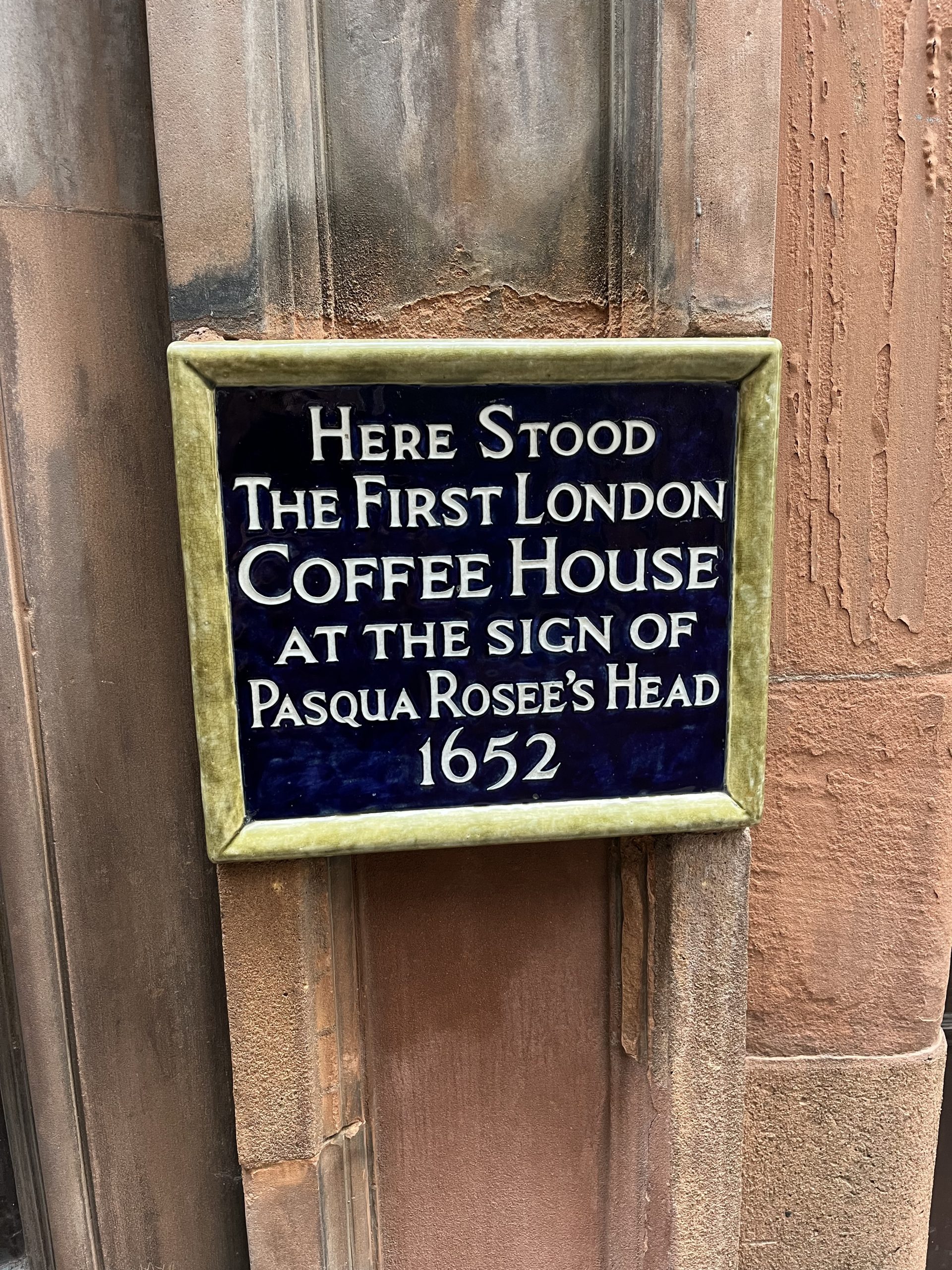
Fancy a stop for a coffee? Maybe a croissant? These days we’re almost spoilt for choice as it seems every other premises is a coffee shop.
Some might bemoan this change in taste from traditional English tea to coffee. But just off Cornhill, down a narrow alley called St Michael’s Alley, there’s an interesting surprise waiting.
Just for a moment, imagine yourself back in 17th century London. The Alley would be bustling with life – merchants, lawyers, hawkers, street sellers, delivery boys – you’d probably have to barge your way along to make any progress.
As you reached the corner (where Jamacia Wine House pub currently stands) there would be what looks like a small market stall on your left. You might be surprised to see a sign with a man’s head in full Levantine headdress staring at you. You would be looking into the face of Pasque Rosee, the owner of London’s first coffee shop. The year 1652.

Pasque Rosee’s unlikely journey to London started in Turkey when he became the servant of Daniel Edwards of the Levant Co. – an English company formed with the purpose of trading with the Ottoman Empire.
Rosee, of Turkish/Greek origin, was employed in various roles by Edwards but one of his most important duties was to serve his new English master the local coffee.
It must have left quite an impression on Edwards because when he returned to London in 1651, he took Pasque with him. Rosee’s coffee proved extremely popular amongst Edward’s friends who would constantly call round to partake of this new exotic drink.
Edwards sensed a business opportunity. He decided to set Rosee up with an English partner (who was a Freeman of the City and would therefore be allowed to trade) in the city’s first coffee shop, and the place they chose – St Michael’s Alley.
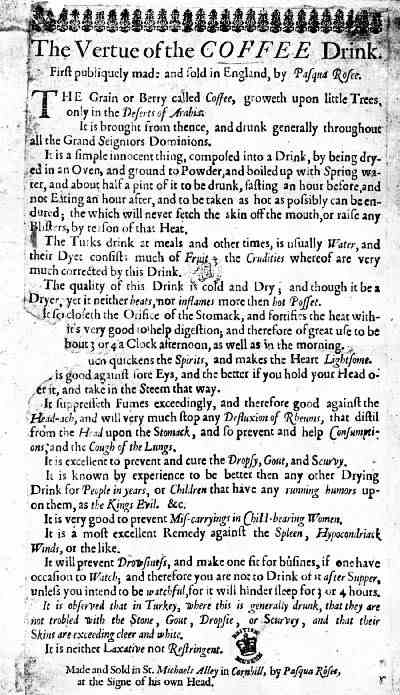
By courtesy of Wikipedia – Pasqua Rosée – http://vintage-ads.livejournal.com/3607660.html; https://books.google.com/books?
It was an instant hit and as so often in life, owed some of its success to timing. England was under the rule of the Puritans and Oliver Cromwell (the King having been deposed in the civil war). The Puritans attacked beer and wine drinking as a debauched activity which allowed Rosee to take the high ground and advertise coffee as a healthy and sober alternative. He even produced a leaflet extolling the virtues of coffee drinking! The city’s taverns were predictably less than pleased.
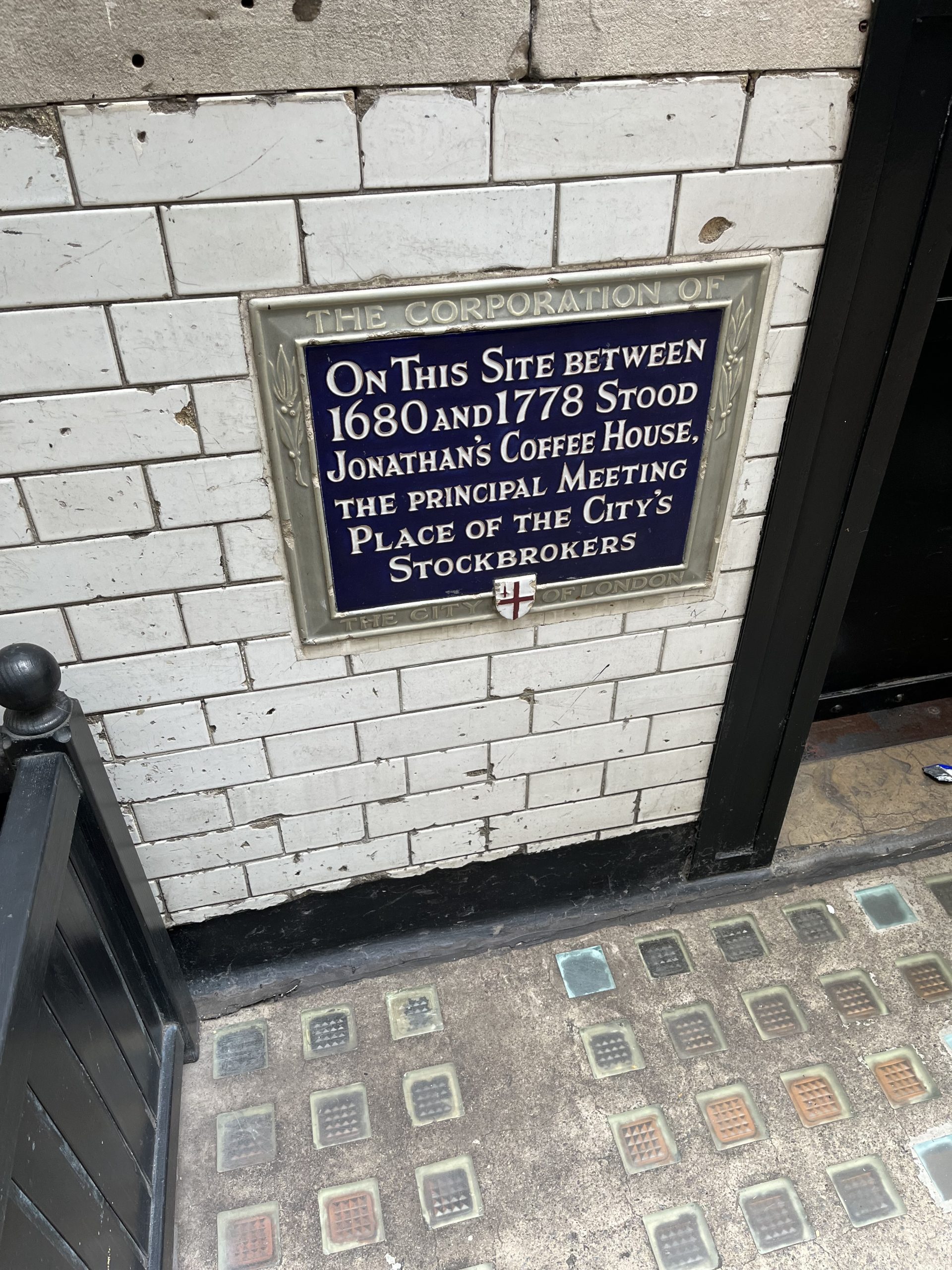
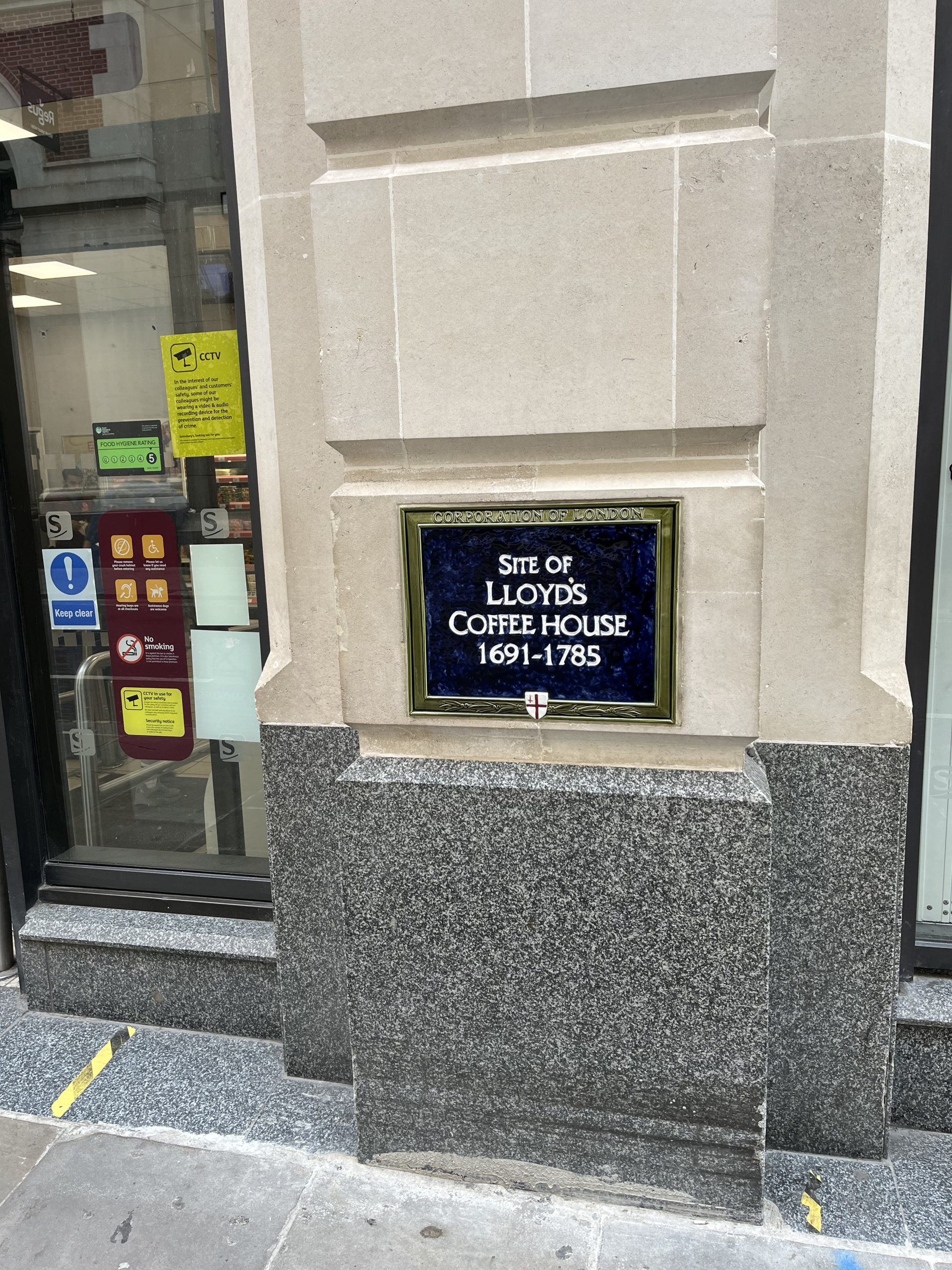
Soon, coffee shops were springing up all over the city –over 500 of them by the year 1700 – and were being used by city merchants as a place to discuss business. So much so that individual coffees shops became the preserve of certain trades who would adopt a coffee shop as theirs. (Hence Lloyds Coffee Shop, ran by a man called Lloyd, became the hub of merchants involved with the insurance industry, paving the way for the formation of the now world-famous Lloyds of London Insurance.)
What happened to Pasque Rosee’s original coffee shop? Like so much of the city it was destroyed in the Great Fire of London. But it gave London its first coffee experience (though I imagine the coffee would have tasted a lot different to todays) and something tells me that Rosee wouldn’t be at all surprised by the latest current coffee invasion.