

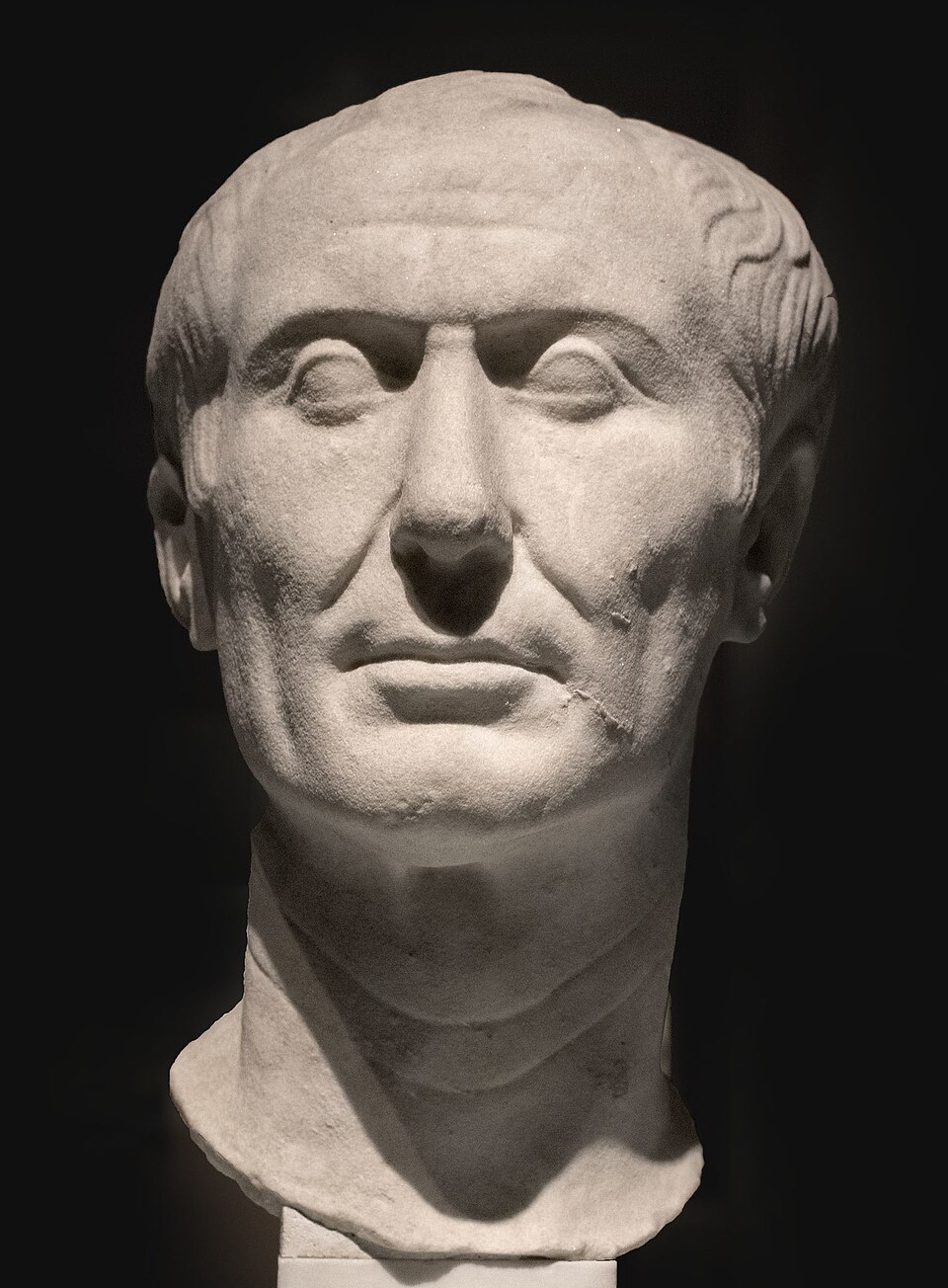
Funny to think that Julius Caesar, one of the world’s most famous historical characters, came to London long ago.
He arrived in 55bc, though admittedly there wouldn’t been much of a reception for him, seeing as London didn’t exist at that time.
Caesar had tried his luck in a great quest to conquer Britain the previous year, but had been beaten off by a combination of fierce resistance from local Celtic tribes and that very British feature – bad weather.
This time he was determined to make his mark and armed with more legions, landed on the Kent coast and followed the line of a great river inland, which he called the Tamesis (wide dark river). Our modern-day River Thames of course.
At a point, possibly near the current London Bridge, he built a temporary wooden bridge, crossed the river and marched his men north, setting up a camp at what is thought to be the area of today’s St Pancras.
London would have been virtually unpopulated at the time, just a series of densely wooded hills and valleys with streams and rivers flowing into the Thames. There may have been some sporadic Celtic farm dwellings knocking about, but most of the British tribes were located further north in current day Hertfordshire and Essex.
Caesar in setting up camp near St Pancras was here on business. He wanted to do deals with friendly tribes, intimidate not-so friendly ones, while all the time keeping an eye on his escape route – just in case. Hence the location just north of the Thames.
He probably would have built just a wooden fort here to use as a base as he didn’t plan to stay long. This was very much a case of Veni Vidi Vici – I came, I saw, I conquered. And then get the hell out of here.
Unfortunately, no archaeological evidence of Julius Caesar’s stay in London remains, the only evidence diaries and written accounts.
Having said that, if you visit St Pancras Old Church, there are some Roman tiles there, but these would have come later, when the Romans returned to stay, nearly a hundred years later.
Image. This file is licensed under the Creative Commons Attribution 2.0 Generic license.