
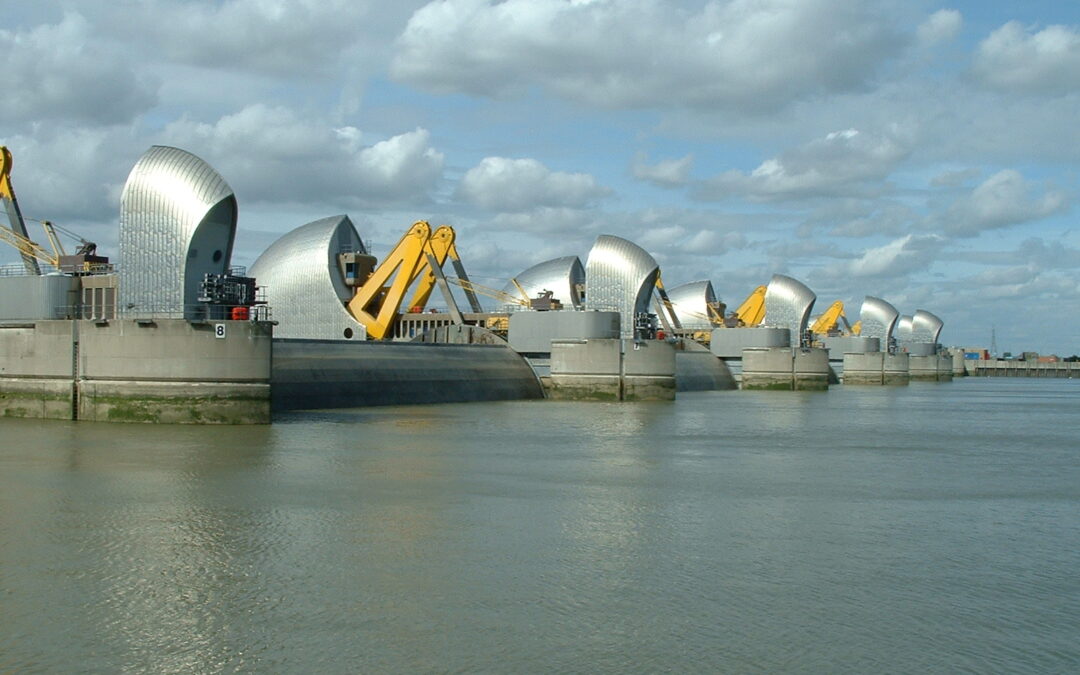
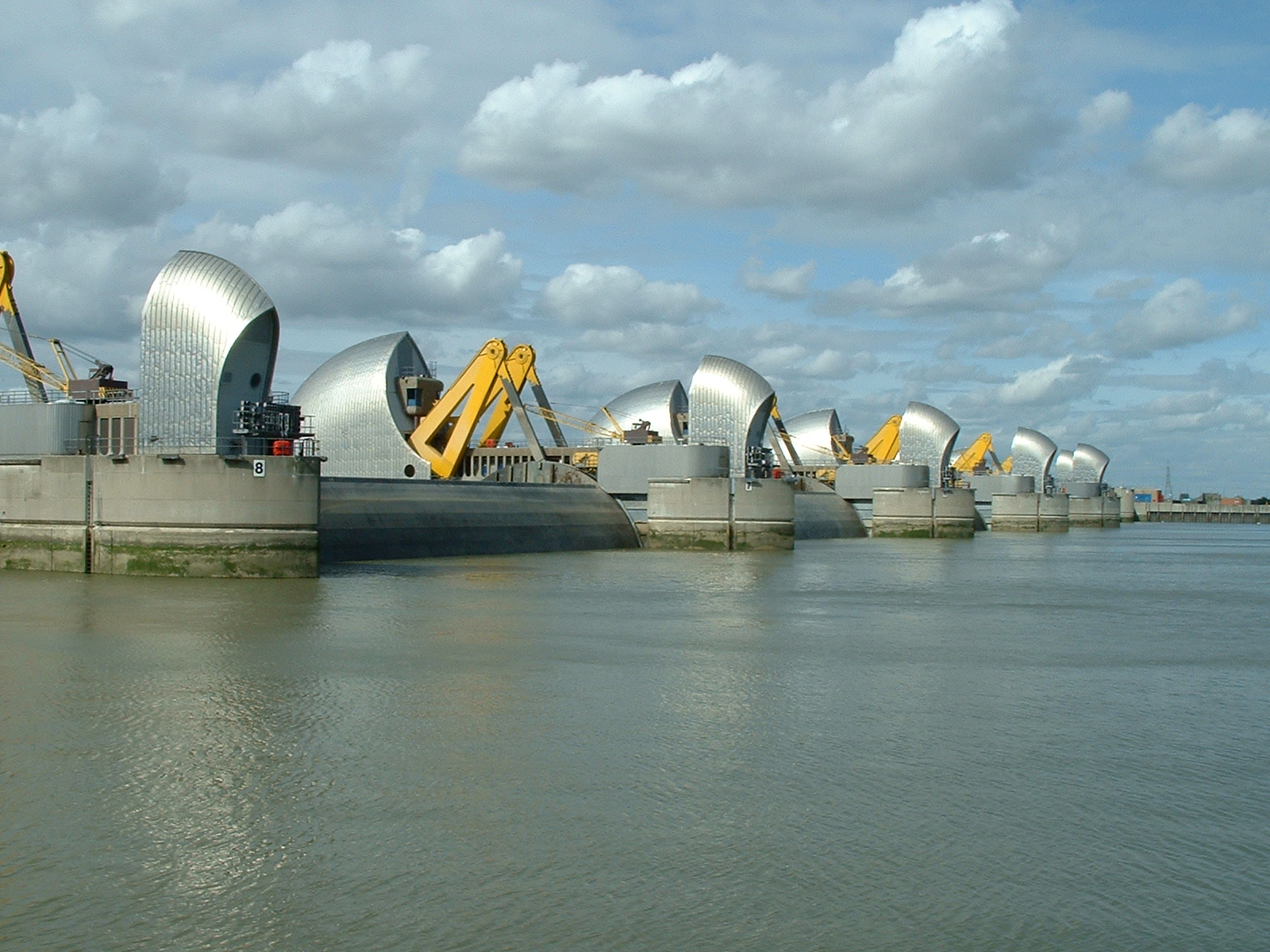
When Londoners talk about the Thames, they often picture its bridges, its muddy sweep through the city, or its role in centuries of trade. But tucked just east of Greenwich stands one of the capital’s most quietly heroic structures: the Thames Barrier, a modern guardian built to keep the city dry.
The story begins in the aftermath of the devastating North Sea flood of 1953, when a storm surge overwhelmed coastal defences and caused widespread destruction across the UK and Europe. London, spared the worst, realised it might not be so lucky next time. Rising sea levels, sinking land, and the funnel-like shape of the Thames Estuary made the city increasingly vulnerable.
After years of debate, design studies, and political wrangling, construction finally began in 1974. Engineers settled on a bold solution: a movable barrier stretching across 520 metres of the river, with ten steel gates that could rotate upward to block incoming surges. When it opened in 1982, the Thames Barrier was hailed as one of the most advanced flood-control systems in the world.
Today, it still looks futuristic, its silver domes gleaming like something from a sci‑fi film. But its purpose is deeply practical. As climate change accelerates and extreme weather becomes more common, the barrier is called into action more frequently than its designers ever expected. Each closure is a reminder that London’s relationship with the river is both vital and precarious.
See the Thames Barrier on a bespoke black cab tour of London!
Courtesy of Wikipedia. Image by Andy Roberts from East London, England. This file is licensed under the Creative Commons Attribution 2.0 Generic license.