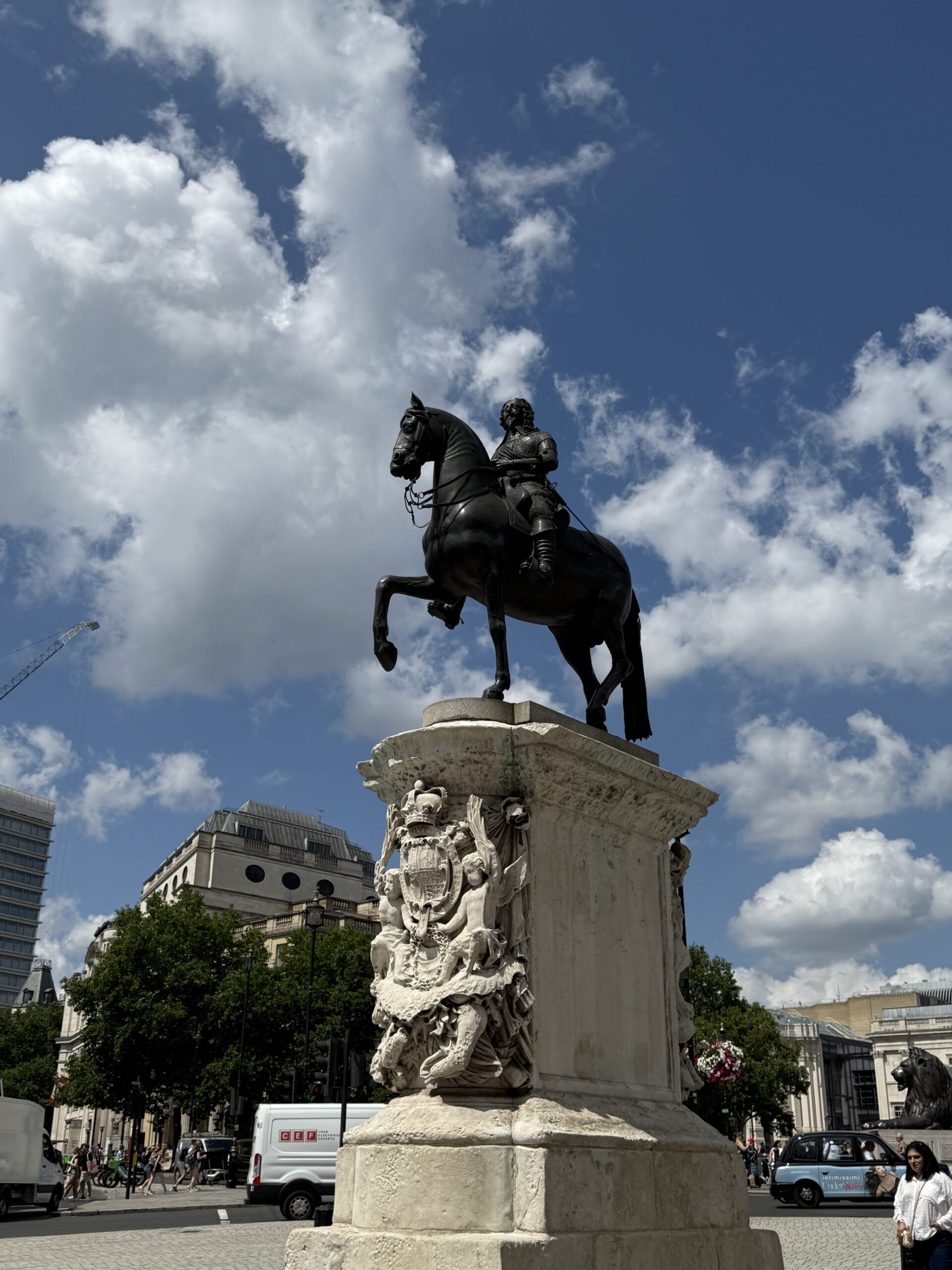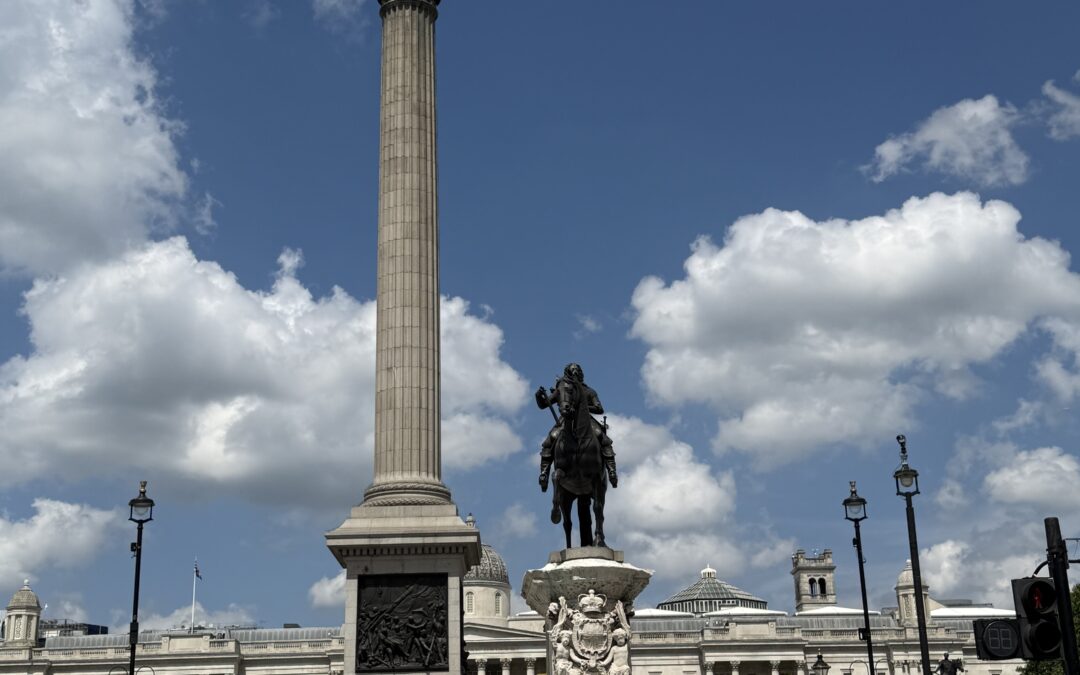
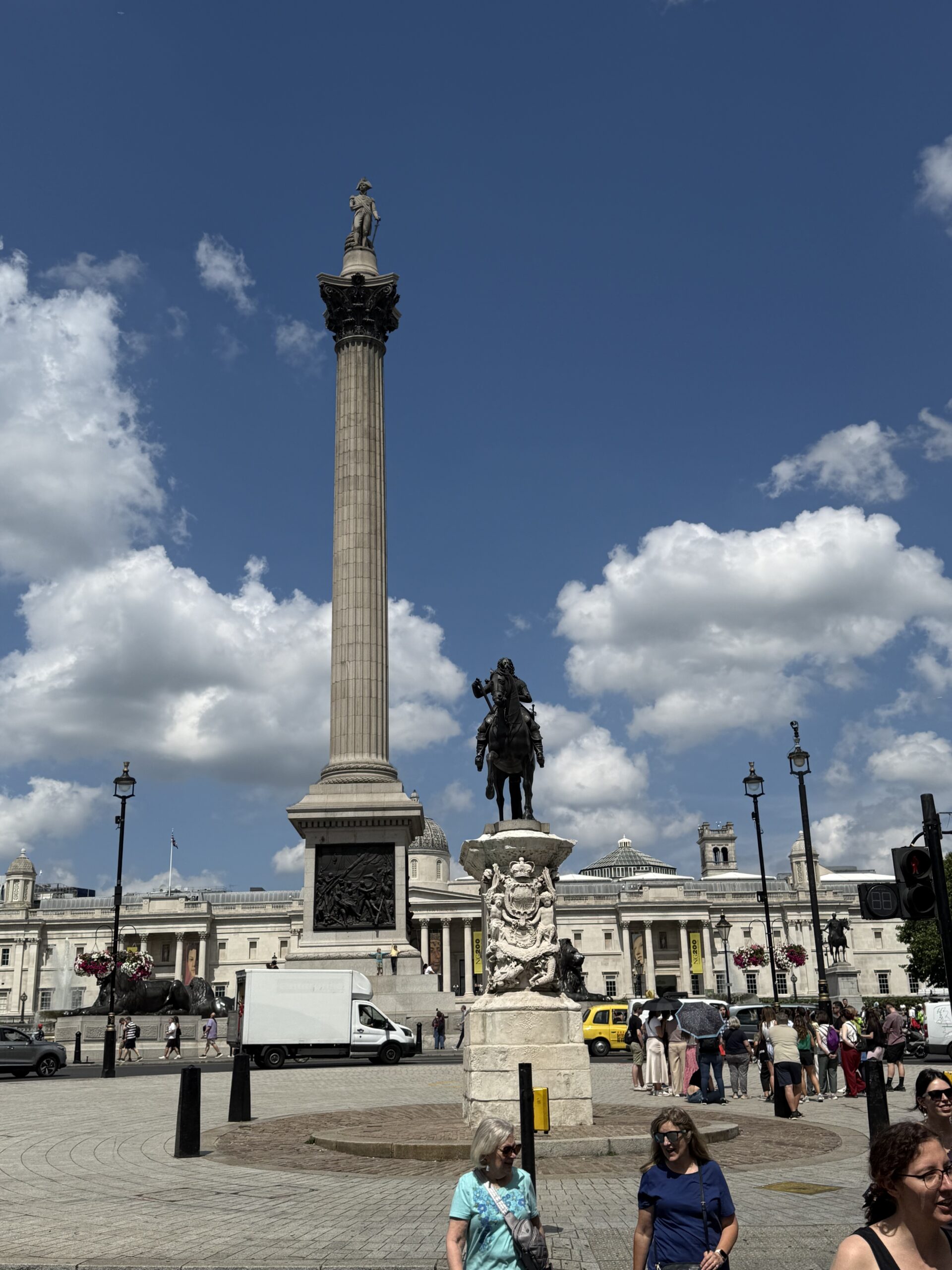
Did you know the small traffic island in front of Trafalgar Square is called Charles I Island? No, nor did I until I did the Knowledge, the exhausting test to become a London cabbie. But that’s not the secret thing here.
Let me try this one on you.
Did you know the statue of Charles I on the island, is the first commissioned equestrian statue in England, the oldest bronze statue in London (cast about 1633), and is considered the central point in the whole of London – a point to which all signs to the capital are measured. And by the way, it’s also where London taxi drivers have to learn every road within 6 miles of this point to do the Knowledge.
Now where getting somewhere you say.
But that’s still not the fascinating story here.
So let’s go back to 1649 when Charles I was executed after a bitter civil war with the Parliamentarians under Oliver Cromwell.
Cromwell ordered that the statue, which was then located in Holborn to be removed and broken down. The job was given to a metalsmith called John Rivet but instead of destroying it, Rivet who obviously saw a chance to make a few bob on the side, buried it in his garden and produced broken pieces of brass as evidence that he had followed instructions, at the same time as selling brass-handled cutlery to both Royalists and Parliamentarians, which he claimed was made from the remains of the statue.
After the restoration of the monarchy in 1660, the statue was found intact and a gleeful Charles II had it positioned here, looking down Whitehall towards Parliament, as a reminder the crown still resigned supreme.