

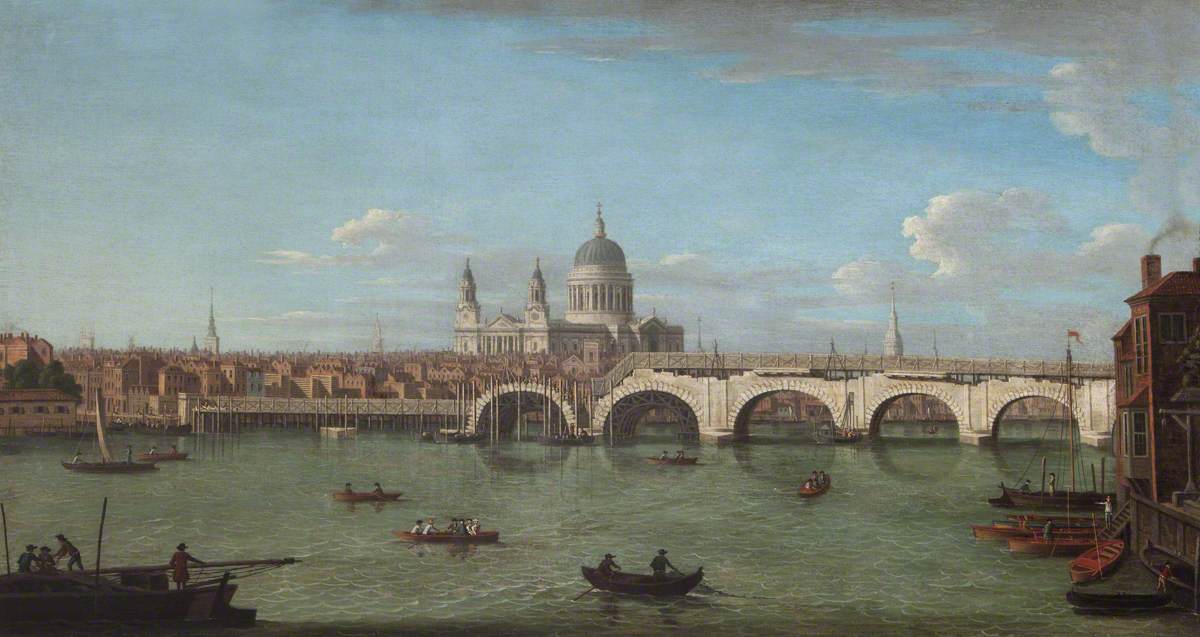
When Blackfriars Bridge first spanned the Thames in the 18th century, it wasn’t universally welcomed. In fact, some of London’s most skilled river workers actively opposed its construction: the watermen.
For centuries before bridges became common, watermen were essential to life on the Thames. Licensed and highly trained, they ferried passengers across and along the river, navigating tides, traffic, and weather with remarkable expertise. The river was their livelihood, and crossings meant business. Every new bridge threatened to cut into that trade.
So when plans emerged in the 1750s to build a bridge at Blackfriars, the watermen protested. They argued that bridges obstructed navigation, disrupted river traffic, and—most importantly—took away passengers who would otherwise pay for a boat. Their resistance wasn’t just stubborn tradition; it was economic survival.
Despite their objections, the bridge went ahead. Designed by Robert Mylne and opened in 1769, the original Blackfriars Bridge was celebrated as a feat of engineering and urban progress. Yet its completion marked a turning point. As more bridges crossed the Thames, the dominance of the watermen slowly declined, replaced by roads, coaches, and later railways.
Today, modern Blackfriars Bridge—rebuilt in the Victorian era and now flanked by the solar-paneled railway bridge—stands as a reminder that London’s growth has always involved tension between innovation and those whose lives are reshaped by it. Beneath the traffic and trains, the river still flows, carrying echoes of the oars and voices of the watermen who once tried to stop the bridge from ever being built.
Image courtesy of Wikipeida. Scott, Samuel; Blackfriars Bridge, London, under Construction; National Trust, Blickling Hall; http://www.artuk.org/artworks/blackfriars-bridge-london-under-construction-171078