
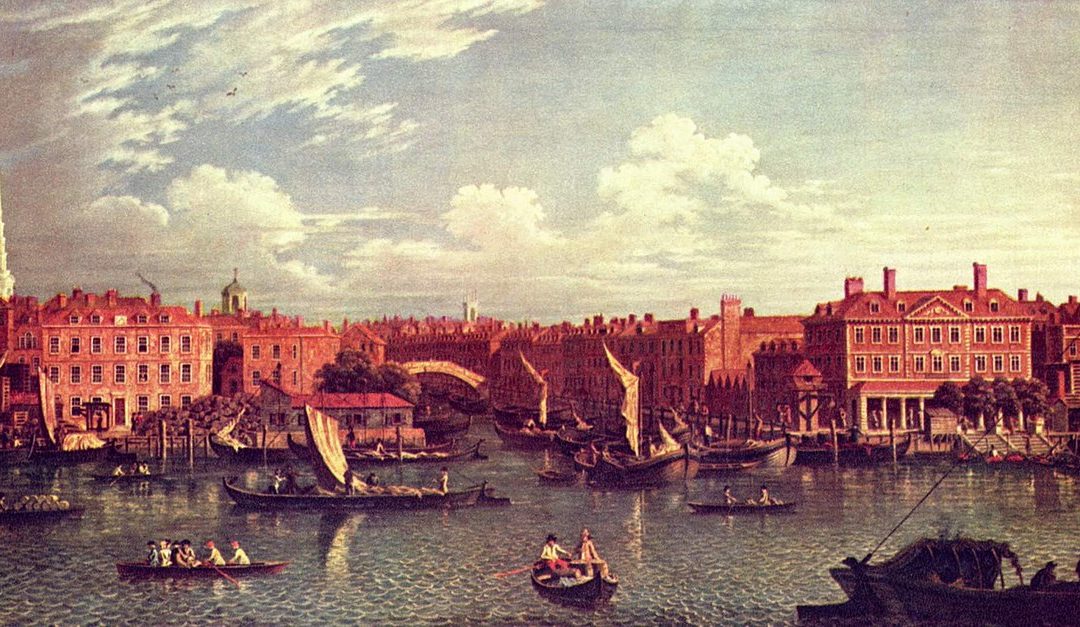
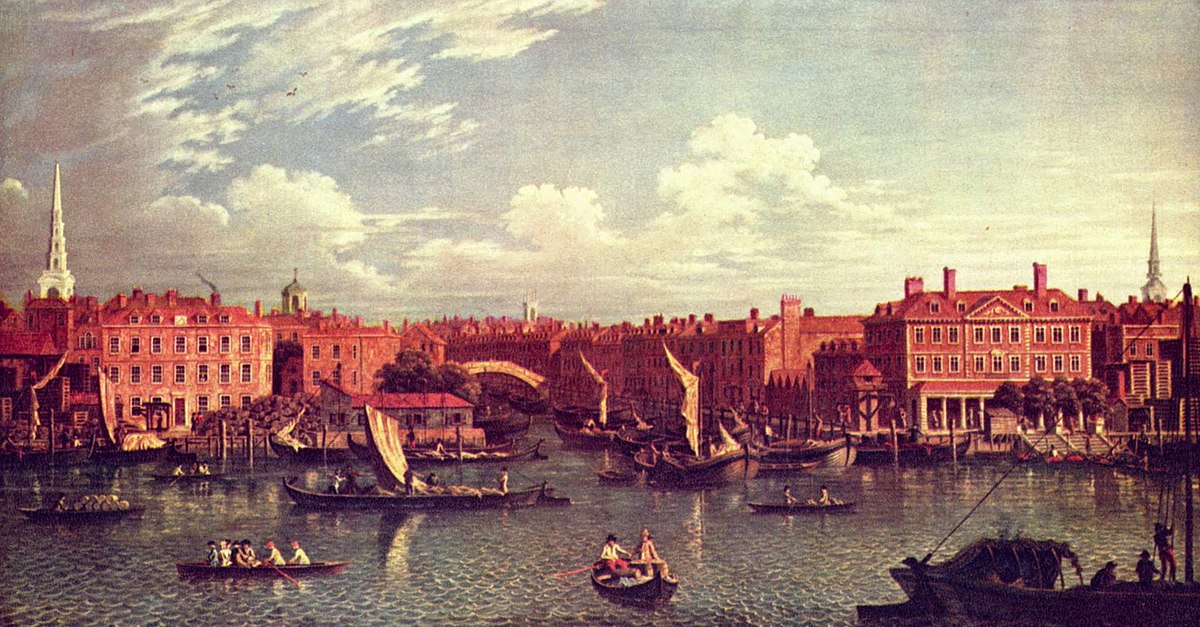
Image courtesy of Wikipedia. The Fleet River circa 1750. By Samuel Scott 1702-17772
To my mind, nothing evokes an image of ‘olde London’ more than the story of its lost rivers.
Take the ill-fated Fleet River for example, which flowed from its source in Hampstead, through Kings Cross, past Farringdon, and out to the Thames under where Blackfriars Bridge is now.
Up to the mid 1700’s, the Fleet had been a serious river with hundreds of boats offloading their goods here. But as London’s population grew it became more and more just a dumping ground.
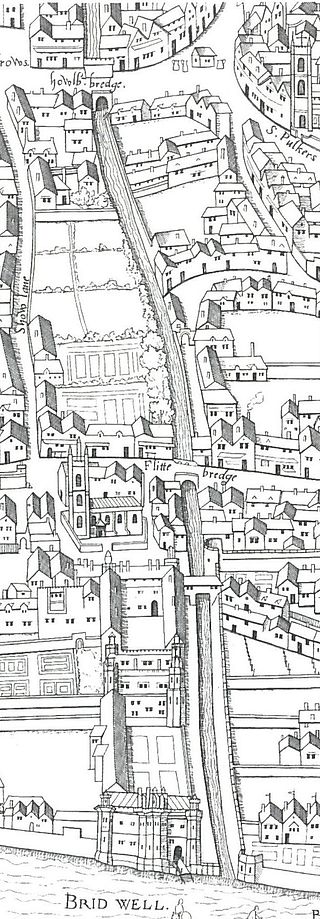
Image courtesy of Wikipedia. Detail from the “Copperplate” map of London, surveyed 1553-9, showing the southern course of the River Fleet from Holborn Bridge to the Thames.
In those days, all sorts of foul waste was thrown into London’s rivers. This was especially the case of the Fleet which was subject to all sorts of vile and unpleasant stuff – including carcasses from the nearby Smithfield Meat Market.
Eventually it became so polluted, there were accounts of people falling into the river and suffocating in the sludge.
Life was cheap here. Along its banks slums grew up and prisons built, including the notorious Fleet Debtors Prison. There was even a legend that an evil tavern overhung the Fleet’s banks where unwary travellers would be lured, murdered, their possessions stolen, and their bodies dropped in the river through a trap door to disappear in the muck and never seen again.
With the coming of the Regents Canal and the underground railway, the sad Fleet was finally condemned to be part of the city’s great sewer system.
But if you want to take yourself back in time, and imagine the once important river snaking its way down to the Thames, stand in the middle of the road (watching out for traffic) outside The Coach and Horses Pub in Warner Street.
By listening through a pavement grating in the middle of the road, you’ll still hear the Fleet gushing and swirling in the sewer underground. The stories it could tell. It can really send a shiver down your spine.